
Is Blogging Good For SEO? Or Can It Do More Harm Than Good
After building ShutterCoWA‘s new website, we did what we do for every website that we launch – we monitor the
After building ShutterCoWA‘s new website, we did what we do for every website that we launch – we monitor the Google rankings and make slight changes where necessary to ensure smooth sailing.
The issue we had with this website is that Google was continually swapping around the pages they had indexed for our main commercial-intent keywords.
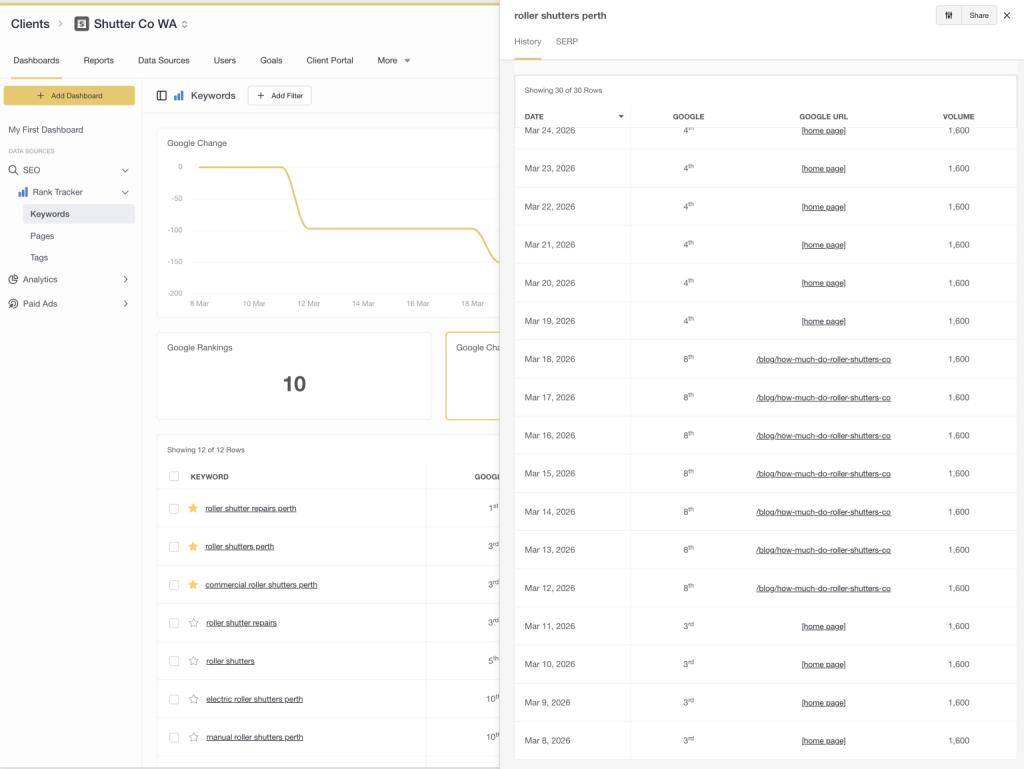
In order to fix this, we had to do a few things:
Had these issues gone un-noticed and not fixed, it would have severly impacted both their SEO long-term as well a drop in genuine enquiries (potentially resulting in tens of thousands of dollars worth of missed opportunities).
For years, blogging has been pushed as a “must-do” for Search Engine Optimisation.
More blogs = more keywords = more traffic… right?
Well…as the great saying in SEO goes; “it depends”.
In an age where SEO has become more complicated, a lot of agencies have resorted to populating blogs in order to justify their retainers.
The problem is that a lot of these agencies are just adapting to the market and don’t actually know what they’re doing.
Blogging done the wrong way can actively hold your website back
Let’s break down where things go wrong, and how to actually use blogging to strengthen your SEO instead of sabotaging it.
One of the most common mistakes we see is businesses using blog posts to target their main commercial keywords.
Things like:
On the surface, it feels logical. More content around those keywords should help… right?
But here’s the issue.
When you create multiple pages targeting the same intent, you’re not strengthening your SEO – you’re splitting it.
Instead of one strong, clear signal to Google, you’re giving it multiple options and saying:
“You figure out which one matters.”
And often, Google gets it wrong.
After building ShutterCoWA‘s new website, we did what we do for every website that we launch – we monitor the

I recently took on a client who had a website built in Duda, which I had never worked in before. […]

NOTE: We have found that from time to time, the Google Forwarding Number redirects to another number – especially if […]
